Thursday, February 28, 2019

Sudden Sympathy: Stars at Night and Le Butcherettes


I haven’t claimed to be a punk in a long time, though that fire was the thing that first lit the rock and roll path at my feet. Seeing LA’s Stars at Night and Le Butcherettes at KC's RecordBar shook me with a visceral reminder why and how that fire first lit. Though I missed most of their set, Stars at Night immediately caught me up in all the possibilities of guitars, bass, drum and a singer determined to cry for life. These four women rocked hard and fast and big, setting what felt like all the hearts and minds in the house throbbing. You can get a pretty good sense of it from the new record’s opening cut, "Searching"- https://www.youtube.com/watch?v=8drhYQg9tbI

Then came Le Butcherettes, like Stars at Night a fundamentally Mexican-American punk band, but with a guitar-strapped and red-keyboard-dancing indigenous warrior as its frontwoman. Teri Gender Bender (Teresa Suarez Cosio) is, despite the name, a righteously feminine presence on stage. Her femininity manages to unlock the power of a rock star while, at the same time, embodying the fan who’s making the most of her time on stage. Cosio’s duality took me back to my punk self. For kids like me, who lived and breathed music but didn't understand the world of the Hollywood-Rock-Star culture, the punks were a human-size revolution, as their brothers and sisters in hip hop would parallel and inform. I think of this video for "This is Radio Clash"—https://www.youtube.com/results?search_query=this+is+radio+clash+official+video 

With all that was happening with funk, hip hop and soul in the 80s, I soon felt outside the punk world, and I've not kept a close watch there for ages. That said, over three decades down the line, the gap between fan and star that created 70s punk is wider than ever. It's exacerbated by the irony that there is a new immediacy to the media, but YouTube sensations and TV talent show contestants arrive without a sense of a movement or fan base behind them.  

Le Butcherettes have paid their dues, and, over the course of its four albums, Le Butcherettes has taken several forms. What hit Kansas City mid-February was a band's band--drummer Alejandra Robles Luna holding down the beat and kicking up a furor to make Keith Moon smile, while bassist Marfred Rodriguez-Lopez and guitarist/second keyboardist Rico Rodriguez-Lopez played near-stoic foils to Cosio's expressive, explosive, dynamic and achingly vulnerable antics. Watching this multi-dimensional, intimate and hard-fought show reminded me that nearly the whole world of what is most raw and real in this rock and roll history is once again underground. The radio has never felt more like the tip of an iceberg. And the revolution is being fought on levels I never dreamed of before, night after night after night.

I didn’t know Jerry Harrison produced their new album until well after I fell for it, but it makes sense. His first band, the Modern Lovers, were important to me for all the reasons suggested above, but that other band of his, The Talking Heads….They redefined what was possible. A slinky, poppin’ rhythm section holding together knife-play lyricism and Harrison filling the whole thing with the appropriate, impossible colors.

It’s enough to say this record has those colors, but what matters is the way the sound serves Cosio’s vision. This is a record that pushes and pulls at the contradictions and complexities of relationships like a saw taken to the bone. Cosio is playful and deadly serious at the same time. It’s vivid in “spider/WAVES” when she telegraphs the opening chant, “Injuries are slashed deep open/Messiahs hold them still.” It’s terrifying….and inviting.

There’s so much to this hard-focused tightrope between grief and liberation. The folky “in/THE END” complements an irresistible, tender melody with a gut-tugging lyric. “give/UP” begins with a battle cry and a charging verse before reaching a bridge built by compassion. That’s in the lyric, but it’s also in the sound, a meandering stream of colored keyboard. Caught up by those sparkling waters, Cosio sings, “Sudden sympathy invades the very fiber of my vicious being.” Such precious connections have everything to do with why I came to punk in the first place. What's more, they lie at the heart of rock and soul itself.

https://www.youtube.com/watch?v=EANtOg0S1Jw

Wednesday, January 30, 2019

Flemington Meets KC: Nalani & Sarina Prove It All Night in 45


On the EP and album (2015's Scattered World and 2018's The Circle) I’ve been listening to over the past two years, New Jersey twin rockers Nalani & Sarina have come to represent what I find missing in most contemporary music—a big vision and a firm belief in that vision. When I heard they were opening for Tech N9ne January 26th, I had to be there though three other favorite bands were playing shows the same night. I took my older brother (my first music teacher) and my nephew (the musician in the family) to their set opening for Tech N9ne, the biggest act in town playing a sold out show at the 2000-person room Voodoo Lounge.

Now Tech N9ne fans, and fans of his label Strange Music, are a wonderfully frenzied, devoted bunch. I can’t think of another Kansas City artist who has anything like his following. I was a little nervous for these Jersey artists I cared so much about because I would not personally want to be taking the stage before Tech and his two Strange-label openers. At the same time, it was a moment of great possibility. I plunged to the middle of the floor hoping, almost against hope, that this crowd would have open ears for the rock show that was going to happen before the Strange Music review.

They had only 45 minutes to make an impression, to gain some new fans.

Some musicians seize possibilities in a way that makes it look thrillingly effortless. Nalani & Sarina are just such artists. These two women hit the stage with guitars—mirror twins, guitar necks pointing in opposite directions—another guitarist to their right, a bassist to their left, drums in the back. They said, “Hello, Kansas City, are you ready to see Tech N9ne?” The crowd roared. “We’re here to warm you up!”

And then—I wish I knew how to say this with the appropriate weight—they tore into it all, their whole set, the whole room. They shouted in unison this clarion call—“Wa, wa, wa, wake up now! Wa, wa, wa, wake!”—and they were laying out the house with this slamming pledge to “stay here forever” and promising “the break of day.” More than a few hands in the house immediately went up.  


On the second song, "The Circle," Sarina took to the keys for a stinging funk riff, and Nalani answered with chunky rhythm guitar, their twin vocals full-throated and pledging that we could become a part of a revolutionary circle of change alongside them. Bold stuff for an audience that's never seen or heard the band before, but inviting, the message of freedom so universal and the energy infectious.

(This video from a smaller show in Chicago gives a hint of what it was like--https://www.youtube.com/watch?v=7wjkrZK4nWQ)

Nalani & Sarina have some wonderful ballads and songs that defy genre description, but they stuck to one hard rocking moment after another. “Wanna Be with You” featured an impossibly fast and facile bass run by Mike Klemash, feeling as much like a pledge to the audience as a love song (which of course it is).  

Things slowed a bit for the reggae-flavored “Deep End,” featuring a primal lead by Ryan Swing. This momentary change of pace allowed a glimpse of the depth of soul that typifies these women. Catchy as hell, you couldn’t miss the poignant hello-goodbye fragility of the desperate relationship at the heart of the song.

 At that point, they traded hard hitting raps and blended those twin vocals for the verses of their flipped bird to the music industry, “Get Away.” The steady beats provided by drummer Sunny Dee held the core of the hip hop/rock mix. The high energy funk of  “Hung Up” raised the room temperature a few more degrees. Though they introduced one of their finest songs, “Pretty Lies” as an experience at a bad frat party, it is tellingly and clearly a song that describes the state of today’s dominant culture and politics.

That’s when the show really got mind-blowing. Their cover of Sam and Dave’s “Hold On, I’m Coming” might best be defined as sweat-drenched, on stage and throughout the crowd. Then, they launched into the Stephen Foster classic “Hard Times (Come Again No More)” as an intro to one of their most powerful, inclusive anthems, “We’ll Be Free.”

(Here's a clip of "Hard Times/"We'll Be Free" from Chicago. https://www.youtube.com/watch?v=MoP2IA-1wrQ)

The show ended with their bluesy “Break of Dawn” as the framework for a medley of Ray Charles’ “Hit the Road Jack,” Taylor Swift’s “Never Getting Back Together,” Aretha Franklin’s “Think,” Prince’s “Kiss” and, well, what everyone has to play when they come to our town, Lieber and Stoller’s “Kansas City.” Sarina hit just the right note by almost apologizing before she did it by saying, “Since we’ve only been to Kansas City one time!” 

It was terrific.

After some wonderful fighting over the keyboards, both sisters playing over and against each other, Nalani stepped centerstage with guitar and began to testify. She shouted, “Just like James Brown said,” and Sarina answered, “What’d he say?” Nalani dropped to her knees calling, “Please, please, please.” The magic of rock and roll is when you are doing it right a moment like that works, and that worked that night as I imagine it does every night. That moment summed up not only the bravery and abandon of Nalani & Sarina’s 45 minute opening set but something close to the heart of the rock and roll universe.  

P.S. On my way out, I picked up their first album, released in 2014. Though they’ve only gotten better, most of what I’m looking for in music was all there even then.  


Set list:

Wake Up
The Circle
Wanna be with You
Deep End
Get Away
Hung Up
Pretty Lies
Hold on, I'm Coming
Hard Times/We'll Be Free
Break of Dawn with Hit the Road Jack, Never Getting Back Together, Think, Kiss and Kansas City.


Friday, December 28, 2018

My 2018: The End of Something and the Beginning of Something More


As a recovering cultural critic, one of the things I need to let go of is the sense that I have to write about some quota of things to see the Old Year out and the New Year in. I am a part of a core group of friends who have shared year-end mix-tapes (playlists) and annotated lists and reflective columns for close to three decades. Friends still send me their year-end playlists, and I am so thankful for that, but I also have this needling guilt that I should produce one.

But no one's really asked for one for years, AND I never liked making them, not much. For one thing, I'm a slow listener. Some of my friends have a Top Ten for each month. I tend to listen to the same new thing all month long, and, then, maybe move onto another new thing the next month. Same way with reading and viewing. I plunge headlong into some things on impulse and ignore the rest of the world. What I come up with at the end of the year is anything but an overview of the year that was.

But the thing that troubles me most about year-end lists is how the bulk of what I'm discovering in any given year didn't come from that year at all. This was a year full of anniversaries that sent many of us back to the music of ’68, while ’78 was an absolutely formative year for me. I also think of albums like Rage Against the Machine's debut, which took a year to catch on, or Soul Asylum's breakthrough Gravedancer's Union, an album that languished on the charts for twelve months before that moving video of "Runaway Train" made that band superstars (for a couple of years). Music, movies, literature and art take their sweet time reaching people. Emily Dickinson and Vincent Van Gogh weren't making "year-end lists" during their lifetimes.
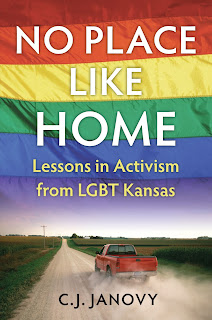
Still, I understand the need to assess the past year and mark progress of some sort on the calendar. I do know the two most important books for me this year were C.J. Janovy's No Place Like Home and Sarah Smarsh's Heartland because they drew such rich portraits of the environment in which I was raised (and where I still live). Janovy did it with her remarkable observational and listening skills coupled with her intuition about truth and story. Smarsh did it by simply raising her voice and keeping herself honest.

Both books refuse to shy away from the ugly truths of the texture of the world I grew up in, but they fight that with portraits of dignity and courage that for the most part go untold. Again and again, the embattled characters in Janovy’s book are embraced and encouraged by neighbors who love them and appreciate them as human beings. Stephanie Mott, a transgender woman who spent a significant portion of her life homeless, so places faith in this decency that she engages in a statewide tour to diners, truckstops, practically anywhere she can talk to everyday people in order to discuss who she is and what she's been through and what needs to happen "if she's going to be okay." The truly inspiring thing is how many people hear that statement in the universal sense, something we often associate with the Black church, "if we're going to be okay."

Smarsh describes what it took for her to tell the stories of those who didn’t get the chances she had. She doesn't romanticize a damn thing; if anything the romantic notions are her confessions of her own sense of self-importance in this quest. But she uses her family to check herself, to root her perspective, and in the process she draws a portrait of lower income Kansas that's, as it must be, a tribute with its textured depth, love and admiration. She helps me see my own friends and family from a slightly different perspective. She has a grandmother who helps me understand things about my own, particularly her sometime disapproval of my attitudes. 

Thom Zimny’s  Elvis: The Searcher documentary worked some territory close to these books. By focusing on Elvis’s artistic biography, this film shows the oft-stereotyped and simplified artist's core power, celebrating the dignity and vitality of all of us abused and neglected every day, all day, all our lives long. In this framework, Elvis seems more important than ever because it's that overwhelming sense of division and hopelessness that tears at everyone these days, perhaps no one more than our youth.

2018 was a year when my younger daughter made me a 50+ track playlist. Just the list of artists is a lot to wrap my head around--K. Flay, Anarbor, Broods, Ruth B., Kurt Vile, Bea Miller, Rainbow Kitten Surprise, Bazzi, AJR, Alec Benjamin, Madisen Ward & the Mama Bear, The Killers, The Bleachers, Panic! At the Disco, Wild Bell, King Princess, Fall Out Boy, Paramore, Matt Maeson, Lea Michelle, Ingrid Michaelson, Tegan and Sara, Troye Sivan, M.A.G.S., I Monster, Marina and the Diamonds, Kendrick Lamar, MELVV, Grace, G-Eazy, Bo Burnham, Janelle Monae, Imagine Dragons, Adam Lambert, Jon Bellion, The Maine, Lorde, The Cab, Kane Strang, XTC, Elohim, Molly Kate Kestner, Twenty One Pilots, Avril Lavigne, Gabbie Hanna, Linkin Park, NF, Quadeca, and an endearing young political rapper called “grandson.”
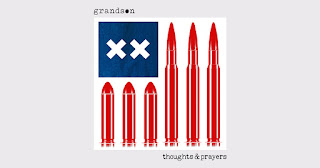

Plenty of familiar names here. I went to college with XTC. I took Trionna to the Electric Lady tour. I think I wrote one of the better early pieces on Madisen Ward & the Mama Bear. I'm familiar with a slim fourth of the people she's listening to.....It's a reminder there's so much going on, always, and there's so much left to learn.

I rediscovered that on a few interesting nights, two with my friend CJ seeing Kamasi Washington (opening with a beautiful set by Victory Boyd) and Logan Richardson, rethinking jazz's role in an era that's largely post-rock (and almost post-hip hop) in the story it tells itself. When Richardson declares from stage that it's Charlie Parker behind all of pop music--way shy of the Louis Armstrong I might have picked or the logical choice of, say, Louis Jordan or Elvis for the Rock 'n' Roll Revolution--well, it's a reframing worth noting. Since the late 1940s, the self-consciousness of be-bop has never left us--whether it took the form of Dylan's beat poetry or Marvin Gaye's sexual and political visions or those two generations later from Janelle Monae. There are new frames to the story, and they're there to help us see it from more objective perspectives than our old windows (not that we should throw those out).
 
2018, for me, was a year of letting go of my fixed perspectives of everything and allowing myself to hear fresh again. It made me think of a comment a friend of mine made, another music writer equally involved in politics, at least 25 years ago. We both agreed the erosion of the basis of our economy (money=labor) would mean a revolution in our society. Something I would say we are experiencing quite painfully today, fraught with confusion about what it means and where we are going. Anyway, my friend said, you know, when this new class of people thrown out of the system try to unify around culture, it won't look anything like what it's looked like in the past.

2018 was a year where I saw that prophecy come true. Nothing means quite what it once did. Everything we thought was dead and gone may have fresh life, and things we thought were eternal may seem illusory. But it's a time of great possibility. I just have to look at my daughter's playlist. Over 50 songs by 48 artists that bear little resemblance to each other much less the fairly narrow canons I thought were revolutionary when I was 16.

To learn what we need to know about one another, where we are going and what we might accomplish, we have to listen closer than ever before. To learn what we need to know, we have to be open to things we wouldn't have considered worthy of openness in the past. To learn what we need to know, we need to recognize the table's been hit, the chess pieces are flying through the air and so are we.

But we can and must land on our feet, and we can only do that if we keep our eyes out for each other, if we offer a helping hand. 2018 showed me that necessity to be open and aware in new and unique ways. I'm not sure it had anything to do with what was released this year. It had everything to do with what was in play.

 
Love to you all. We're going to find each other and hold on, and we're going to make it through this storm. It all depends on recognizing our unity in the struggle. The struggle can and should and must bring us together. Happy New Year to all my fellow fighters.

To quote one of my dearest friends, "Love, love, love!" Love is just about all we need, but it takes some work, and a little science, to figure out the rest.  


Top of Form


Saturday, December 22, 2018

Working My Way Back to You: The Heart of Rock & Soul and the Ties That Bind

 At the end of my semester, I had my second level composition students write a little journal about a record or song that they would call a favorite. This activity was literally inspired by a dream that woke me 5:30 that morning. I was trying to herd a bunch of students in a public place and find us all somewhere to sit. It wasn’t working, so I just started saying, “Write about your favorite song!” It fit with what they needed to do that day (an analysis exercise), so I brought along my lifelong mentor Dave Marsh’s book The Heart of Rock & Soul, read snippets from a few entries and had them write their own.
Perhaps because I’ve devoted most of my life to music and I’ve been a little estranged from that work lately, I have found myself thinking a lot about these journal entries, especially what they had in common. My students are a pretty diverse group. Though the largest fraction are young women and a few men (white, Black and Hispanic) from my area, in these classes I also have students from Ethiopia, Eritrea, Cameroon, Pakistan, China, Japan, Iraq and Iran. I played with the demographics all kinds of ways, but the most interesting aspects of the journals are the ties that bind them together. Though most students wrote about being attracted by the sound of a record or a song, that isn’t what yielded the most interesting connections. I am taken with all the ways my students use their music.
The most common single tie that binds responses together is a sense of belonging. Sometimes that feeling is microcosmic, like a student writing about her boyfriend buying her fries when she had too much to drink. But often it is on a larger scale—how a whole family chimes in repeating “Oh, Christmas Tree” for the entirety of the song’s lyric or how an entire family associates Israel Kamakawiwo’ole’s “Somewhere Over the Rainbow” with the student as a little girl or Katy Perry’s “Firework” with another, singing it to her uncle each year when she went to visit him.
Sometimes, it is about the George Strait or Joan Sebastian, Dad or Mom used to play in the car, or the Lebanese singer Fairuz who reminds my Iraqi student of her once-normal life back home, from the breakfast table to getting dropped off at school. 
Sometimes it is about a family with a musician, like the memory of being a little girl and thinking her aunt was Joan Jett (or the other way around) because she had seen her aunt’s cover band play “I Love Rock & Roll” long before she knew anyone else sang it. Then there’s the grandfather who made up his own words to Elvis’s “Can’t Help Falling In Love” when he sang it to his granddaughter, and the memory of playing Elvis for him when he was recovering from heart surgery. I believe that student plays the guitar herself.
Those who aren’t motivated to play music still use it for motivation. One student has drawn on Janelle Monae’s “Tightrope” to navigate her way through difficult situations; another has used Logic’s “Everyday” to put up with juggling too much school and too much work. Dua Lipa’s “New Rules” encourages another student to honestly express her emotions and keep moving forward. One uses music to “make my mood better and make me think deeply.”
These private uses often relate to pain. A number of the journals above dealt with the loss of a loved one, the song lending the writer a way to carry that pain. One student’s father always talked about when they’d share a beer on her 21st birthday but he died when she was 19, so she associates life after him with Cole Swindell’s “You Should Be Here.” Another student uses Son Lux’s “All Directions” as a way to appreciate the moment and life’s constant state of change. Another talks about how Twenty-One Pilots’ “Migraine” speaks to the battles in his head.
Some of these battles are literally to keep getting out of bed in the morning. One young woman loves The Black-Eyed Peas’ “Where is the Love” because it helps her deal with “all the hate in the world.” Another young woman writes about how Sufjan Stevens “Mystery of Love” helped her through her first heartbreak and “come to terms with what had happened.” Another tells how Breaking Benjamin’s “Until the End” gives her the upper hand in ongoing battles “with severe anxiety and depression.” Her journal is echoed by yet another young woman’s journal about J. Cole’s “Once an Addict,” relating “to every line” and using it to “overcome and better think about my situation.”  
J. Cole, "Once an Addict" art
If anything is a sign of the times, it has to be the amount of anxiety and depression that surrounds us. The world is changing, rapidly, and the future is obviously uncertain and more than a little bit terrifying. Taken as a whole, these journals show how people engage with music to find ways to keep going and to find each other. I didn’t categorize these, but the range of emotions my students used to describe their music says a great deal.
According to these students, their songs express relatable pain, yes, but that’s never the whole thing. They also make “my heart [feel] full” and help us “have fun.” They are reminders of “the best days of my life,” and they are “uplifting.” They are “smooth and catchy” and “romantic and playful.” My students’ songs calm and comfort as well as excite, and their songs counter worry and hopelessness with feelings of individual strength, strength in numbers and joy and love and peace.
It’s a wonderful reminder why I have been either writing music or writing about music since I was 15, and also a reminder that neither myself nor my students have to feel as alone as the world tends to make us feel. I hear all of these songs calling us to come together, and though we don’t yet quite know how, all of these students and their songs say the answer’s all around us.