Friday, May 20, 2022

Folk Alliance, Day 2: Marching On

Los Angeles singer-songwriter Chris Pierce began his set by congratulating the Oklahoma City couple that fronted the trio Wood Willow before him. Someone had shouted “It’s their honeymoon,” and Pierce said, “That’s a beautiful thing, to declare your love in front of friends and family like that.” 

With that, Pierce took command of the room. I’m probably underestimating that Los Angeles singer-songwriter Chris Pierce stands 6’4”, but what matters is the way Pierce’s black-suited, white hatted frame seemed almost to crouch to fit in the stage area by the hotel window. Moving through one pointed confrontation with injustice after another, from “American Silence” https://www.youtube.com/watch?v=80dpcoV5eVU (“It’s a crime!”) to the hard therapy of “Ring Them Bells” (“Shame it, face it, damn it to hell!”), to his contemplation of the concept of freedom in a world where the poor person stealing for her survival faces prison while the employer stealing wages faces no repercussions, only rewards, “Chain Gang Fourth of July,” 

Pierce’s part blues, part gospel shout insisted everyone in the room and half the hall that extended beyond us face the lies that tear us apart and keep thinking on them until we find a way forward. As Pierce puts it in “Silence,” “we sing through the pain and keep on marching on.” 

Any attempt to describe Pierce’s sound falls short. He has a beautiful, soulful voice that can soar, like Sam Cooke, beyond all imaginable boundaries. At the same time, on songs like “It’s Been Burning for a While” and “Static Trampoline,” he can run that voice through urgent jazz figures to pick this stubborn lock that keeps us where we are rather than where we are being called to be. 

On “Trampoline,” a song about the loss of his father, he turns that improvisation into proof that he will find a way, pouring his desperation into fevered harmonica explosions before pushing that voice as hard as he can. For Chris Pierce, music isn’t simply magic from the ether (oh, that’s there, in a big way) but more importantly it's hard work and fierce determination. 

Pierce ended his set with “How Can Anybody Be Okay with This?” https://www.youtube.com/watch?v=KMjhNFDf-JM, a song that begins “I’m sick and tired of this song/we’ve been singing it too long/singing ‘we shall overcome someday.’” 

He said that he planned to read the names of the ten people killed in that Buffalo supermarket last weekend, but he didn't have it, so resolved, “I’ll do it tomorrow,” before beginning the simmering build, asking why we stay in this holding pattern, society corroding from the wear, his voice a desperate effort to maintain hope, his melody a leap of faith that resonated throughout the rest of the evening. 

My friend Mike Warren and I carried Pierce’s resonating vision with us to the Mundial Montreal room, where artists from Quebec built upon it. With a trio our host compared to Crosby, Stills & Nash, and songs that called to mind virtually every seasoned impulse of early 70s folk rock with its warm melodies and harmonies, David Lafleche started that part of our evening in an assured, inviting way. Lafleche’s debut single “We Collided” https://www.youtube.com/channel/UCs7ksHskKpc9vQo42uXIJLw 

And the musicians who followed fleshed out the idea of music as a tool to fight for the world we can envision when we sing and play together.

Colombian Ramon Chicharron’s four-piece blended sounds from South America with the Caribbean, even a touch of West African Highlife slipping in and out on the guitar. It perfectly suited Chicharron’s sound when he talked of a world without borders, “like the one all the other species we share this world with live in.” Then, he introduced “Pescador,” a song about a South American culture where fishing is done daily because, “why keep more fish than you need? The ocean is the refrigerator!" Ramon Chicharron, “Pescador”--https://www.youtube.com/watch?v=UgeMM8rfv_s&list=PLqpvhIJmoG_ZJIZjdz9BBwwuJyBLaL8NS&index=7 

Things became tender with a performance by Montreal’s Genevieve Racette and her brilliant three piece. Songs like “Someone” and “Maybe” were lump-to-the-throat direct and evocative. Genevieve Racette, “Someone”— https://www.youtube.com/watch?v=RNk1pD3fHGY

The evening ended with a raucous set by the jump-suited, and jumping, band put together by Sao Paulo, Brazil’s Diogo Ramos. Ramos spoke of genocide back home and called on us to sing all the louder for those whose voices can not be heard. He concluded with a sentiment echoing Chicharron, ”Samba sans Frontieres.” A highlight of Ramos’s set, “Gamela” https://youtu.be/IdoNsyi4K4o

Thursday, May 19, 2022

The Return of Folk Alliance, Day 1: Magic and Contradiction


A refrain at this first Kansas City Folk Alliance in four years connected Allison Russell to Jason Mraz and countless others, some way of saying, “music is magical.” For the four years before the break, Folk Alliance served as a yearly reminder for so many of us. Especially those private showcases. There’s something to getting away from the mainstage and even the barroom and hearing music in a hotel bedroom, beds generally (but not always) replaced by folding chairs, the hotel room stage either the area in front of the wet bar or the spot in front of the windows. Everyone in the room is engaged in a strikingly intimate ritual, a kind of party where one or four or half a dozen take the others on a mystery tour through their musical ideas, everyone engaged more as participants than audience and performers.

So after the lack of intimacy demanded by the past two years in particular, the magic was especially palpable at this reunion. When Fayetteville, Arkansas’s Patti Steel sang about missing every hug she might have had from her family and friends, she was speaking for virtually everyone in attendance. The conference featured three lanyards—a green one (hugs and handshakes please), a yellow one (ask first), and a red one (no contact please), and it made perfect sense that the green ones were gone by the afternoon. By evening, attendees were writing “green” on their yellow lanyards so others wouldn’t shy away.

Still, pandemic numbers are edging higher again, and the postponed-from-February conference was lighter in attendance than four years ago. Everything was available through remote access, and the halls to the private showcases were far from the brimming chaos of past years, more like any other halls anywhere, though a few people would be crowded outside a door halfway down and at the other end, and, in those muffled distances, beautiful voices clearly sung out.

That said, the International Folk Music Awards filled the great Century C Ballroom, and it was an extraordinary event. Though the politics of past Folk Alliance Conferences have been generally muted, give or take what happened in individual sets, four years of apocalypse had certainly changed that.

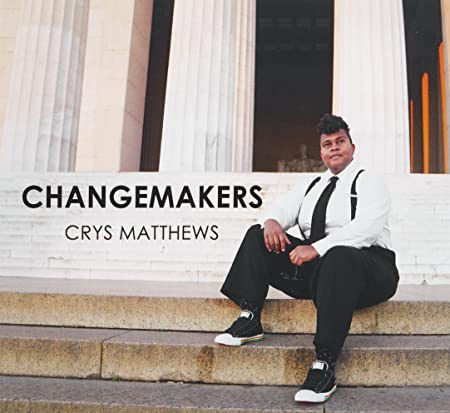
On the mainstage of the awards show, singer Diana Jones led the crowd in refrains of “We Believe You,” a song explicitly for Southern border refugees but speaking to all those being brutalized by the current system. https://www.youtube.com/watch?v=G0NS9FGERCg While song of the year winner, Crys Matthews declared we all commit to being “The Changemakers.”  https://www.youtube.com/watch?v=zZbJk-WXaSw   


Lachi and Gaelynn Lea of RAMPD

 2016 Tiny Desk Contest winner and cofounder (along with singer Lachi) of Recording Artists and Music Professionals with Disabilities (RAMPD), Gaelynn Lea said that it was important that we recognize disability as not simply a setback but a matter of diversity, raising the issue of equality in a system that is, by design, unequal. For all the beauty of seeing the Folk Alliance celebrate artists as diverse as Bolivian composer Amado Espinoza, organizer of Black Opry Fest Lilli Lewis, Los Cenzontles leader Eugene Rodriguez, Odanak Wabanaki First Nation songwriter/performer Mali Obamsawin, and Africasong Communications founder and deejay Dr. Jonathan Overby, the systemic roots of our oppressions were gotten at by Lea’s comment. Such roots were also addressed by Lifetime Achievement Award Winner Flaco Jimenez when, in a video tribute, he acknowledged his music had long been dismissed as low class and unworthy of attention.

Allison Russell, when she received the first of her two awards (one for album of the year Outside Child, one for Artist of the Year), challenged the room by stating, “we know tolerance is not enough. Tolerance is not enough. We tolerate mosquitoes. Humans need love.” With those clear calls, insisting that it is more than the look of Folk Alliance that matters, the awards ceremony celebration of diversity became a bigger call to think hard about the central problem of equality.

Patti Steel

That theme was picked up by Patti Steel, a remarkable multi-instrumentalist (we’re talking guitar, mandolin, clarinet, and spoons here) with a powerful voice, who sang of the rent being due and all her money spent. It takes more than magic to solve that rent problem, a problem that threatened the lives of millions during the pandemic, a problem addressed by Steel’s "Quarantine 2020." The folks working to solve that problem—like KC Tenants and the Kansas City Homeless Union—can tell us all just how useless magic is in solving that problem. But the magic of music indeed does break down barriers and builds bridges, my own aim of the past thirty years never more apparent than driving home last night past the homeless encampment off Southwest Boulevard, contemplating how the world of Westin Crown Center and such groups struggling to survive might be brought into more immediate dialogue and constructive work, not charity events but strategic planning as equals.

Stillhouse Junkies

My night ended in the British Underground room listening to the Stillhouse Junkies, a band from Durango. Lanky guitar and mandolin player Fred Kosak acknowledged, “Yeah, that’s right, we’re the obligatory Colorado band on your British Underground bill.” Kosak and upright bass player Cody Tinnin picked with an insane urgency, while fiddler Alissa Wolf not only matched their frenetic energy but used her long full bows to lend the music a sweeping, mythical grandeur. In the end, a song about certain defeat became its own refutation, the magic of the music existing in its contradictions.

The Stillhouse Junkies, “Whiskey Prison” https://rhythmic-rebellion.com/video/1a92ebb438/whiskey-prison


Gaelynn Lea’s Tiny Desk Concert https://www.youtube.com/watch?v=n6oSeODGmoQ


Saturday, April 09, 2022

The Kids Are Alright: grandson with Royal & the Serpent


grandson

    At last night's tour ending show at the Granada Theater in Lawrence, Kansas, grandson and opener Royal & the Serpent stood united selling the idea that rock and roll still exists to not only save lives but change the world. Prowling and bouncing around the stage, both acts fronted three piece heavy rock bands that played like each moment of their sets was the one that most counted. Both artists radiated vivid, nuanced emotion: Royal, a young woman defiant in the throes of pain; grandson, a young man who cuts the excitement of a legendary rocker with a kind of vulnerable physical comedy. Not only did they both rock hard, but Royal and grandson talked to the crowd, a lot, with an eye-to-eye compassion, telling all of us to take care of each other for them, for us, for what the night was all about. It was the perfect bill, Royal wielding the rock band to liberate the crowd followed by grandson trying that same thing on an epic scale, taking time to linger on how bad those we don't understand are hurting, perpetually turning the conversation to keep our unity the focus.     

Royal's set may have been my favorite of the two moment-for-moment. Lyrics I'd never heard before put a lump in my throat. Her talks with the crowd were unflinchingly honest, and that voice only leapt into another level of intensity when she sang. And I would be remiss to overlook the band's cover of the Killer's "Mr. Brightside." So many were at my daughter's age, uniquely experiencing the trauma we're all experiencing in the most formative years of their youth. Hearing that whole crowd sing that refrain at the top of their lungs, I couldn't help but think of what it meant in a new way. In this crowd just coming out of a pandemic, facing a disastrous economy, not having known anything like peace in their lifetimes, the song sounded like today--saints lost in a sea of contradiction, once comforting lullabies now just plain lies, everyone there rightfully distrustful of their parents' generation and the future itself. After hearing (and watching) that room embrace their mutual struggles and pain in song after song, that moment all-but-reinventing a 2004 Top 40 hit carried a giddy sense that everyone could also write that pain off as "the price I pay" and recognize the future as unwritten, a destiny calling. 

Royal 1
Grandson centers the show on the center of the crowd, dividing us up to respond to different calls, himself diving into the heart of a thrashing crowd to finish the climactic song. From the innocent bodies of "WWIII" to the messy determination to win in "Dirty," this music was about everyone, artist as fan and fan as artist. The narrative was a story we all acted out in the room together. At one point grandson asked who were artists in the house. He paused as if jumping thoughts, saying, "The only thing that separates the artists from those who aren't yet on this stage is a delusional belief they can save the world, and it's fragile as porcelain." 

My daughter kindly invited me to this show to see a favorite she'd introduced to me four years ago. Those were dark days for me, and I have a distinct memory of grandson's "Best Friends" keeping me upright on a nearby track I ran like it was spiraling into the Earth. At that time this music seemed a glimmer of what it's all about. Tonight, seeing these two bands perform, I watched that glimmer take shine. On the final cut "Blood//Water," Royal & the Serpent and an opener we missed (Nova Twins) all took the stage and that light exploded with warm textures of shimmering brilliance. It was no less than  a revelation to see such a light, once again, shining boldly into the future. 


Royal 2

Nova Twins, I'm definitely following now.


Monday, February 14, 2022

Knowing Where She's Going As Sure As Where She's Been: The Much Needed Vision of Miko Marks


When my friend David Cantwell played Miko Marks’s “Race Records” for me over the holidays, something in the sound of Marks’s voice (and her fine band, the Resurrectors) showed me what I’d all but left behind. In a world where pop music’s well into its third decade of being so micro-formatted that the concept of a Top 40 or any meaning to a Billboard album chart seems quaint, I find myself questioning why I do what I do.

But Miko Marks cannot be denied. To hear her singing Creedence Clearwater Revival’s “Long as I Can See the Light” transforms everything that came before into something improbably new and, arguably, more powerful. Marks’s rallying cry here, her take on John Fogerty’s “Yeah! Oh-Yeah,” sounds as sure-footed as the tree planted by the water in “We Shall Not Be Moved,” the traditional that closed her most recent full-length, “Our Country.”

Miko Marks has displayed the heart of her vision since her remarkable debut “Freeway Bound” and its follow up (now almost fifteen years ago) “It Feels Good.” Marks has a big vision that ties generations together with a possibility found through compassion. For new listeners, her March 2021 album “Our Country” and (6 months later) EP “Race Records” serve as sublime introductions to what came before.  

"Kickin' Back," Freeway Bound

“Ancestors” opens “Our Country” establishing a sense of purpose, certainly as a Black woman (even further, as part of a movement) working within a tradition often associated with whiteness. The emphasis on primal drums and percussion keeping the singer “walking the weary road” calls on the entirety of the tradition touched by the African diaspora, from freedom songs to country to rock and soul. Marks takes a perspective she’s had since her first album, looking back to gauge her way forward and offers a rare sense of clarity—“I know where we’re going sure as I know where we’ve been.” Ancestors video

Her cover of Stephen Foster’s “Hard Times,” takes on the complex legacy of America’s pop music for its central metaphor. Singing through a thicket of cascading arpeggios with a bass line guiding her way, Marks names “the song, the sigh of the weary,” tying the age-old field worker’s struggle to the Flint water warriors of “We Are Here.” This music underscores what music, at its best, helps us do--find the strength to fight and a unity that just might win. "Hard Times," on both albums, performance video

That strategy is there at play in the following raucous “Pour Another Glass of Wine, Jesus,” and it’s there when we’ve all but given up, as in the biting, elegiac ”Goodnight America.” Always, as on the gospel centerpiece “Mercy,” it’s drawing together the people to “raise up a nation,” to “move every mountain,” to keep on “fighting, fighting, fighting for better days.” By the end of that performance, the piano, organ and Marks’ voice and choral backing have built to a state near jubilation, an army of the meek not just inheriting but, potentially, saving this weary old Earth.  Mercy lyric video  


But the path from here to there is a hard one, and “Travel Light” tells of  the fighter scrambling home to regroup. The strong narrative that runs through both these albums makes sure we hear the difference and the connection between that shaken traveler and the mothers, children, and unemployed workers in “We Are Here,” fighting for their lives at home. In one sense, they are every bit as defeated as one another, so they do what they have to do to (what they can) to survive, using music to “hold on to faith” and “cry, we are here.” "We Are Here"

Moving far from Marks's onetime home Flint to some place way down the Mississippi, the ragtime “Water to Wine” follows, declaring the singer’s conviction to “be planted by the water til that [potentially poisoned] water turns to wine.” With that, she ushers in the closing traditional, “Not Be Moved.” “Like a tree planted by the water,” this anthem roots not only the album but Miko Marks’s vision. Shoulder to shoulder with all these frail souls, she warns those in the way, “Boy, you are weak, and you won’t hold on much longer.” All our ancestors are in this righteous choral refrain, burning with guitar, smoldering with organ, and high-kicking with piano and percussion.  Not Be Moved

The six covers (released six months later) that make up “Race Records” amplify the story told above by calling directly on the ancestors again and again. All songs made famous by white artists, they are also songs that would not exist without the African aesthetics, including call and response, that define American popular music. The title references both the genre label for any song cut by a Black artist for the first half of the 20th Century and the segregation of music marketing that generally remains to this day, vividly evident in Marks’s own beloved country music but also the historical dividing line between rock and R&B.  


With the Stanley Brothers’ “Long Journey Home” we get the weary traveler from so many songs before accompanied by harp and acoustic guitar and haunted by that death that’s been waiting in the shadows since the beginning of “Our Country.” It’s the threat that keeps these characters moving. Coupled with the concept of home here, it’s also a place of life and inspiration, a source of strength, the place of the ancestors. Long Journey Home video

Playing with Willie Nelson’s psychedelic blues take on Johnny Bush, Marks revels in “Whiskey River,” a stubborn celebration in what seems like the deepest darkness yet. As she bites down on “I’m drowning in a whiskey river,” Marks delivers the metaphor as all but literal. Still, swaying as hard as “Water to Wine,” there’s life, even delight, in her ability to sing it. Plunging into even more treacherous territory, her honky-tonk “Tennessee Waltz” recognizes the music itself as capable of producing heartache. The important thing, though, is the tragic-comic acceptance of this vocal—when Marks’s voice soars in celebration of the “beautiful, wonderful, maaahvalous, glamorous” song that took her baby away. Tennessee Waltz, Race Records

As she reiterates with the Carter Family’s “Foggy Mountaintop,” the very power that can take her “all around this whole wide world” is the same power that can leave her stranded and alone. It’s the bluegrass strut bolstering her wide-open vocals that tells us she’ll be alright. Marks’s voice is a wonder: with a light touch, she delivers grit and gravity, always soothing where she cuts. Foggy Mountaintop, Race Records

The way she maintains that sound and vision renders her absolutely convincing when she cries “I won’t, won’t be losing my way” on “Long as I Can See the Light.” Over these sixteen songs released in the dark days of 2021, Miko Marks forges a coherent narrative out of the whole of the American music story. She insists on the strength in our vulnerability, carrying us toward a certain peace glimpsed just over the horizon. Long As I Can See the Light video