Tuesday, October 17, 2006


Where the River Runs Black

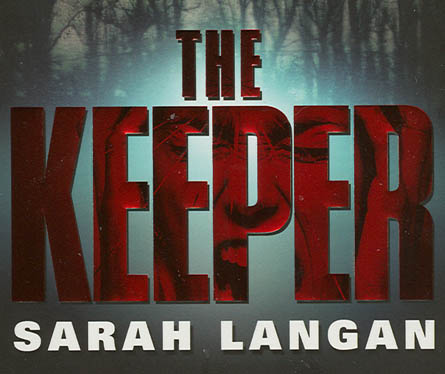
Finding Sarah Langan’s debut novel, The Keeper, at my corner grocery store has turned out to be a happy accident I can only compare to my “discovery” of Stephen King’s Salem’s Lot at a bus stop when I was 12 years old. And I feel doubly blessed right now to have read The Keeper on the heels of Bentley Little’s The Burning, two horror stories that also happen to be that most exquisite and rare find in the genre—distinctly American ghost stories.

Key to this is that this book begins with a quote from Bruce Springsteen’s “Independence Day” and manages to live up to that song’s haunted naturalism. The characters in this novel are real people living in the real America at the dawn of the 21st Century. Like so many Americans, these are characters who were born just a few decades ago into a society that promised, expected and planned for only the continued economic expansion that defined the American identity up to that point. And now those manufacturing jobs that served as the vehicle for that expansion have been automated away and become globally outsourced--leaving people who have given their lives to the company confused and betrayed and haunted by what never will be. In this case, Langan focuses on the small town of Bedford, Maine, and a paper mill, but whether we’re from my ex-oil town in Oklahoma or Whirlpool’s lame duck home in Benton Harbor, Michigan, we know the scenario all too well, and that makes this setting universal.

Even more important for satisfying fiction, particularly something as subjective as a ghost story, the focus on strong characters underscores the link between such political betrayals and our most personal secrets. Rich, vivid characters abound in this novel—each with their own heroic qualities and each with dreadful failures that they can’t ever quite shake. All of them are haunted by the Marley family, particularly Susan Marley, a beautiful, preternaturally gifted girl who tries to save her family from itself but winds up all but destroying it and taking the town along for good measure.

Though Langan shows herself to be a writer with an unflinching ability to savage her characters and fling her readers right along with them into the abyss, she has the absolutely necessary counterweight that makes King and only a handful of other writers, never mind writers of horror, so special. She knows people, and she knows them too well to sell false hope or, an even easier trap in our age, to fall into an easy cynicism. Where this book ultimately goes, no reader is likely to expect, but it’s a conclusion that comes from a knowing vision and trust in the integrity of these characters she has invested with so much life.

Ultimately, what I think I like best about great horror stories and ghost stories in particular is the way they counter our daily inoculations against reflection. The best ghost stories are, almost without exception, rooted in a reflective quiet. That’s that psychic space necessary for those things that have their reasons for not staying buried to come out and play, and Langan delivers a sprawling universe of such spaces. Even during some of the most apocalyptic horrors that threaten to run the book right off the rails in its final third, the prose has a Bradbury-like whisper to it that serves to keep the reader close.

In another song from the same album as “Independence Day,” Springsteen asks, “Is a dream a lie if it don’t come true, or is it something worse?” The Keeper gives us a good look at the maw of that “something worse.” It has to. Some things will never rest until they are dealt with head on.

Of course none of this would matter if Langan didn’t do it so well she’s only left me wanting more.

Now if I could just get over the genius of such a title for a debut—not only accurately describing the book but the woman who wrote it.

http://www.amazon.com/Keeper-Sarah-Langan/dp/006087290X/sr=1-1/qid=1161149105/ref=pd_bbs_1/102-3149483-3364948?ie=UTF8&s=books

Sunday, September 24, 2006


American Gothic

Ghost stories abound in our culture—good ones, too—though they rarely work in long form. I can’t stomach the cheese of The Ghost Whisperer, but I do overlook the convoluted and silly plots of The Medium for the show’s guaranteed chill-per-episode and its greatest asset, a family that doesn’t look like it knows it’s on TV. And while the charm of those ridiculous Brits on Most Haunted wears thin pretty quick, I do love that earnest Roto-Rooter gang on Ghost Hunters. Then there’s the countless ghost story anthologies rivaled only by true crime biographies and cold case investigations (both arguably forms of ghost stories) filling up basic cable stations like A&E, TLC, Discovery, the Travel Channel and Biography.

I’m sure many find this distressing evidence of how the horrors of real life are driving contemporary America into fantasyland. And while I can’t deny the truth in that, I think that’s superficial. I personally love it because I’m a fan of the ghost story aesthetically. But more importantly, I think it’s a trend worthy of, if not celebrating, at least understanding.

I think it’s as fundamental a core human impulse as writing a love song (psalm, sonnet, whatever), one of the expected responses to gathering around a fire at night, because it fills important needs—to find community in our needs, to face our fears and, at its best, to reckon with our past.

But—surprisingly enough—though what I think of as a certain ghost story template, the gothic plot, shapes much of our best fiction, very few ghost stories manage to work well over the course of either a full-length movie or a book. For that matter, very little gothic horror sustains itself that long. Go ahead, count up the horror books or movies that satisfy from beginning to end, and I would guess, unless you’re a Stephen King (who seems to have read and seen every one in existence), you’ll run out of titles before you run out of fingers.

Which is reason enough for me to want to celebrate Bentley Little’s new book, The Burning, probably available on your grocery store racks as I type. Since King talked him up in a recent Entertainment Weekly column, I’ve read two other Little books, and--while I appreciated their sure-footed prose, largely convincing characters, and most important, their genuinely chilling moments—this was the first where the surrealism did not gallop over some hill that made me sigh and contemplate (briefly) giving up and going home. It’s a tough job—weaving a believable universe out of nightmares and having it achieve the lift necessary for a satisfying novel—but I think it’s an important one in a society as hobbled by denial as ours, and Little does us a great service in the most modest way here.

Consider this novel’s scope, which it manages beautifully in less than 400 pages. It starts as a number of separate ghost stories, each intriguing in its own way—

A border patrol agent haunted by the migrants she thwarts on a daily basis, and the bodies of one such family she discovers who died in hiding, takes her son and flees the job and the bad marriage that goes with it only to find herself confronted by the ghosts of another mother and child in her new home.

A young Latina just starting her college career finds herself, first, bonding with her fellow classmates as they listen to disembodied voices coming out of closets and stoves in the middle of the night before the racial injustice behind the ghost story roars to life and turns against her.

Then there is the park ranger whose lonesome nights gradually fill up with fantasies of succubi that turn into the most unsettling kind of waking nightmares. For the longest time, he writes off his imaginative flights to his slim acquaintance with his Native American roots, but his dreams and reality become indistinguishable and he gets swept up in a tide approaching epic proportions.

Not so incidentally, all of these phantoms are Chinese, and The Burning works as well as it does because of the magic realism that weaves an American Indian sensibility, including hints of the Aztlan, with that of the Asian into a fabric that rounds out the more familiar tapestries of the American West.

What makes it all work is a magic to the pacing, something that reminds me of a series of personal experiences. Years ago, I was honored to spend a considerable amount of time working with several American Indian organizations, including AIM, on some local human rights issues. I distinctly remember the way our meetings would take shape. Indians of all ages and both genders would begin gathering at some prearranged start time, and people would talk and discuss what was going on in their lives and the children would play, sometimes for what seemed like hours. But at some particular point, when the light and the mood and the feel of the room was just right, the Elders would simply move to form a prayer circle, and the formal proceedings would begin. At that point, in the light of dusk or dawn, the air was undeniably charged with magic (whatever it is that magic may be).

Little’s The Burning has that sort of intuitive sense of pacing, and its final reckoning—focused around the forgotten persecution of the Chinese after the completion of the transcontinental railroad—is undeniably charged with magic in much the same way. And what the story (like almost all horror stories) lacks in real world solutions to the undead issues it raises, it finds a way to imply by insisting we can’t look forward without looking back, we can’t solve anything through vengeance alone and something even more important. The Burning, most importantly, asks us to free our imaginations to look past defeatism. It asks us to confront a familiar reality that’s nothing more than a systematic conspiracy of silence, consent and nurtured ignorance and see the possibilities of human will unfettered by such restraints.

It’s hard to ask much more of a tale of make believe; it’s also hard to imagine any more important reason for such tales to exist.

--------------------------------------------------

Speaking of people who deserve to have themselves shaken awake by things that go bump in the night, see the great SoundExchange article by Fred Wilhelms in the current Counterpunch. Chances are, you can even help with this reckoning--https://owa.jccc.edu/exchweb/bin/redir.asp?URL=http://www.counterpunch.org/wilhelms09232006.html

Thursday, September 07, 2006


Alien Nation

“All that hatred down there,” he said, “all that hatred and misery and love. It’s a wonder it doesn’t blow the avenue apart.”
--James Baldwin, “Sonny’s Blues”

It is no secret that rock music has long offered a home for rebels without a cause (or at least rebels uncertain of their cause). A big part of what attracted me to Springsteen and his music, as I mentioned before, was a sense that it spoke in some way for me, that it was my music. And a lot of that feeling, from the beginning, was tied up in the song, “Adam Raised a Cain.”

With guitar work that snarls and stings, a menacing bass progression that says “stay out of my way” and a vocal that leaps from cool anger to shouted anguish, this comes close to being Springsteen’s angriest cut ever, and at that time, with a Pentecostal fury that smells of fire and brimstone, it was the closest he’d come to both metal and gospel.

Though the song might be characterized as a showdown between father and son, it is really about the sins that both carry, that tie them together in their ongoing struggle with one another. The frustrated rage comes from both the son’s desire to take his pain out on his father and the recognition that his father carries the same pain, thus confusion over who deserves blame.

This intense identification with a father the son would like to consider the enemy speaks to the way art complicates easy answers, and the way that song spoke to my 15-year-old self makes it that much more complicated. My father and I always had an unusually close relationship. But at that moment in my life, my father had just remarried, and my father’s parenting style was in sharp conflict with the dynamics of his new wife and three new children he’d adopted. In that way a child has of being able to empathize with parents in conflict while seeing their mistakes all the more amplified, I felt helpless, wishing I could somehow stop my father from pushing this new family too hard. Deep down, I know I was angry with both him and my new family, to various degrees.

But, like most of us, anger was a problem for me. In my early nuclear family, I had always been the peacemaker--or at least middle man--between my mother, father and brother, and while I might openly be angry with both my mother and father, I generally felt protective of them. And I could almost never express my anger with my brother or anyone else. I’d watched my parents rage enough that I had learned not to vent my anger in that way, and I’d learned also to always think long and hard about the other side’s point of view.

The sad thing about that perspective was it would take me about two more decades to realize this way of thinking often led me to repress my own anger. I denied my rage. I ate it, and it ate me up inside.

By identifying with the murderous link between father and son in this song, I was able to vent some of that rage. That was the song that had me shouting at the top of my lungs and pounding the dash as I drove my car, and in many ways it was the doorway that opened me to much of the rest of the rage that was central to the punk and new wave music of the time. Later, it would be what I heard stated most honestly and dramatically in the social and political aggressiveness of heavy metal and gangsta rap.

All of this is to say anger is one emotion we often don’t understand, but we feel it, and we bond with art that we see as expressing it. Over the years, I’ve noticed two qualities in my students who I can most easily identify as music fans. One, is their sense of alienation, illustrated by their tendency to wear black music t-shirts and seat themselves in far corners of the room. The other, ironically, is their general characteristic of being kind and open people when they are addressed without condescension. As I project from my own experience, the sweetness and the anger may be inextricably connected. The passive and the aggressive can so easily go hand in hand.

Music fanatics (and I would call myself that, yes) tend to bond with one another in their alienation from mainstream society. In my high school, I knew the handful of fans of underground music by band pins and t-shirts they wore. I’ve generally known my student music fans by their various levels of outlaw dress. Whether they have ultra-white skins, black hair and black clothes; or Harley Davidson, heavy metal shirts and wallet chains; or odd hairdos of different colors, and the occasional extravagant make-up; or dreadlocks, tie-dyed and marijuana-leafed clothing; or their hip hop-cocked hats and low-slung pants—they identify themselves as separate from the dominant culture (which gets harder and harder to define) and aligned with some subculture associated with a specific style of music. Of course, not everyone reveals themselves so openly and certainly not in these precise ways, but my music fans generally announce their sense of self as an outsider in the sterile atmosphere of the academic classroom. I felt that way enough in my own experience as a student, and I still carry a sense of that as a teacher who can’t quite figure out how I ended up on the other side of the podium.

Of course, some kind of alienation has consistently inspired rocking and rolling. I think there’s little coincidence that Clyde McPhatter, Sam Cooke, Marvin Gaye, Aretha Franklin, Otis Redding and Bobby Womack were preacher’s kids, not only because they learned something about the spirit and showmanship in that environment but also because that role set them apart—for better and worse.

Elvis Presley illustrates the alienation that gave birth to rock and roll as well as anybody. Like Jerry Leiber and Mike Stoller, Elvis Presley was a “cat,” a white kid who immersed himself in and aligned himself with black music. But unlike the relatively affluent Leiber and Stoller (who seemed to consciously engage with black culture out of a sense of social justice and/or rebellion) from an early age, Elvis simply identified with black culture as much or more than he identified with the dominant white culture.

In her Elvis book, Bobbie Ann Mason writes, “Elvis was born into the mind-set of poverty: the deference toward authority and the insolent snarl underlying it, the feeling of inferiority, the insecurity about where the next meal is coming from.” She continues, “The effort to keep from falling off the bottom social rungs into the despair of abject poverty requires an almost gothic desire—and will. The American dream is more urgent when dreamed from near the bottom.”

And somehow, Elvis could hear that dream in music. He grabbed every chance he could to hear music, going down to the courthouse to watch Mississippi Slim play the WELO Jamboree, heading home to hear the Grand Ole Opry on Saturday nights, and getting up and, some Sunday mornings, going to the all black AME church to listen to gospel and spirituals. He was really that kid who carried his guitar with him when he went to school and told the other kids, the ones who would talk to him, that one day they’d be hearing him on the radio.

In what may be my favorite passage, Mason continues: “In high school, he grew his hair long and wore ostentatious outfits from Lansky’s when other kids dressed in simple, nondescript duds and wore their hair in crewcuts. Of course, they made fun of him. Today we may not realize how gutsy it would have been to wear a bolero jacket or black pants with chartreuse-trimmed pistol pockets to school in the conformist fifties. Elvis’s choice of clothing affirmed his marginal status, and it was also an expression of freedom. The shy kid, who often hid in the back row at school, wanted to draw attention to himself.”

That is the heart of the impulse that binds together the glams, greasers, gangstas, ganjas and Goths who people the far corners of my room to this day. A vision of self and community that comes with the music—a unity that seems not to exist anywhere else.

In the mainstream of society that surrounded Elvis, there was no clear path to freedom. But the choir down at the AME sang of freedom, and anyone who played and sang exhibited a freedom to follow their dreams that was simply taboo anywhere else in society. That’s why Springsteen’s, “It ain’t no sin to be glad you’re alive” hit so close to the heart for so many of his fans.

A few years ago, when I was sitting watching a concert on TV with my father, he said, “You know why I have such a hard time getting into this music? I resent the fact that they can be so free. I never felt I could be so free.”

Why are teenagers in particular so alienated? Maybe because they sense what their parents feel, have felt? And maybe their own daily trials show just how high the stakes really are? For a million personal reasons, we each have our own means of looking in the mirror and seeing only the freak. One kid feels lepered by acne, while another feels ostracized by a few extra pounds. I can speak for my own list. I had big features that looked goofy, and I’d been sickly a lot as a kid, and I wasn’t particularly coordinated at sports. I was too shy to talk to girls I liked, and my brain went blank when forced into small talk.

The thing most of us face, at least by junior high if not earlier, is that we’ve been lied to. As young children, we tend to be taught that goodness is a virtue, and cooperation is the key to getting along. Some of us are taught that we are special and that we can achieve our dreams when we grow up. Sometimes we even get told that we live in a country where everyone is free and anyone can be President when he or she grows up.

But we don’t escape third or fourth grade without knowing most of these promises are empty. Goodness means nothing when you are the kid targeted by a playground bully, and competition, not cooperation, is the real name of the game. Glares and flicks on the head and a thousand humiliations tell us that we aren’t special at all in the real world, and kids that have fancier homes and nicer clothes tend to be more popular than others.

By adolescence, both school and church begin to represent nothing else so much as the hypocrisy of the world around us. The most self righteous and arrogant kids win heaps of approval, while we struggle against anonymity and degradation. Once, when I was writing a love poem to my crush in the margin of my notebook, my Spanish teacher stopped just over my shoulder and began to read the poem aloud to my classmates, who burst into laughter. That’s the real world of adolescence, in direct contradiction to all that wonderful stuff Robert Fulgham remembers from kindergarten.

Rock music speaks to that betrayal with an honesty that’s all but missing elsewhere. The credit belongs to that class of America’s poor who started the whole thing. In the land of the free and the home of the brave, the founders of rock music and its descendents knew freedom meant the right of one class to enslave another while bravery risks the lynch mob. Whether or not they knew it consciously, the field holler in their voices spoke it and continues to speak it today. The call and response between singers and players asks for a larger conversation with a world of alienated people, suffering in isolation, seeking solace and rejuvenation to make it through another day. What we all know is the way the warmth of melody and rhythm—even when it’s white hot with anger--counters the cold world that surrounds it.

In a world where virtues are expendable and ideals are written off as naiveté, the dreamers naturally feel alienated. And in the Jim Crow world of 1954, it’s significant that Elvis Presley’s first record was a message of acceptance. “That’s Alright Mama, any thing you do.” It was the first of a new breed of records that said this land is truly made for you and me.

(from Monsters, Marx and Music) --art by Lauren Alexander

Friday, September 01, 2006


Something To Be
“I heard what he had gone through, and would continue to go through until he came to rest in this earth.” --James Baldwin, “Sonny’s Blues”

In his book Lipstick Traces: A Secret History of the 20th Century, Greil Marcus gets as close as anyone has to defining the significance of the late 70s punk rock explosion. Marcus describes the punk response as a “No” to the spectacle of both the political and popular culture of the late ‘70s. To illustrate this, he describes the Sex Pistols’ lead singer Johnny Rotten, as “a medium”—“as he stood on the stage, opened his mouth, and fixed his eyes on the crowd, various people who had never met, some who had met but who had never before been properly introduced, some who had never heard of some of the others, as Johnny Rotten had heard of almost none of them, began to talk to each other and the noise they made was what one heard . . . . because this tradition lacked both cultural sanction and political legitimacy, because this history was comprised of only unfinished, unsatisfied stories, it carried tremendous force.”

And the force of that “no” to the dominant culture led thousands of kids who knew next to nothing about music to pick up instruments for the first time and make the loudest, angriest noise they could possibly make. Beyond the big “no,” the aims were virtually non-existent and self-destructive because, as Marcus puts it, the antidote to crowd spectacle is crowd panic, the tension he felt when he saw the Sex Pistols perform their last concert at San Francisco’s Winterland Ballroom in January 1978.

I grew up a long way from San Francisco, and my memory of the Pistols’ visit to Tulsa’s Cain’s Ballroom--covered on the nightly news like a true threat to Oklahoman youth--was only a puzzle to me. But though I was a rock fan, the music hadn’t yet turned my world upside down.

Music had always been a part of my life, particularly as a connection between me and the older brother whom I idolized. Some of my earliest memories are of Elvis and the Beatles, whose records were always in the air, and the covers of which I would contemplate on the floor of my brother’s room. No adult or even teen (at least without psychedelics) could ever appreciate the light dancing vibrancy of the Magical Mystery Tour album cover the way that a child can. And then there was James Brown’s Cold Sweat, with thrilling and scary album art of a man so drenched in sweat, robing and disrobing in multiple frames, that he looked like the most vibrantly alive person I’d ever seen and somehow near death at the same time.

When I was six, I got my parents to buy me a copy of Eric Burden and War’s “Spill The Wine,” and I remember dancing in my room to that song and the b-side “Magic Mountain.” As my parents’ marriage disintegrated and my brother disappeared from the home into a throng of his cowboy hippie friends, alongside children’s records, I played my first real album, the one my brother gave me for Christmas, The Beatles Again or Hey Jude or whatever it’s called. Later, I would learn Paul wrote “Hey Jude” to console Julian Lennon after his parents’ divorce. Whatever it did for Julian, I got the message and will always be thankful for it.

The summer my parents divorced, the summer of ’74, I would become enamored with my blue ball-shaped (more than a little like a pod out of 2001) transistor radio and Casey Kasem’s Top 40. My soon-to-be-step-sister and I would call in and request such kid-friendly schmaltz as the Heywood’s “Billy Don’t Be a Hero” and Paper Lace’s “The Night Chicago Died,” along with the more mysterious sounds of Steely Dan’s “Rikki, Don’t Lose that Number” and Michael Murphy’s “Wildfire.” I began buying more singles, one of my favorites being the Hues Corporation’s “Don’t Rock the Boat,” which was as soothing and hopeful a dose of soul as any child could hope for. In 1976, Stevie Wonder’s Songs in the Key of Life became my first favorite album of music outside of the Beatles’ canon.

But 1977 became a sort of turning point for me, when I was fourteen and initiated into the wonderful world of adolescent girls by my cousin Julie and her beautiful best friend Pam. Through them, Fleetwood Mac became my soundtrack. My junior high buddies and I also started going to mobile disco dances at the American Legion Hall where songs like Heat Wave’s “Boogie Nights” excited my imagination, and I lucked into my first slow dance to the Bee Gee’s “How Deep Is Your Love?”

But all of that music was still distant in some way from the shy world where I lived most of my life. 7th Grade marked the beginning of a 4-year crush on a girl named Lisa, whom I couldn’t talk to without a stammer, even though she drew on my back every day during my Spanish class. I just froze when I felt her pencil touch my back, and I thought about the things cool guys would have turned and said.

The summer before high school, I would ride my bike all over town and visit my brother in the trailer park where he lived with his girlfriend. I remember the music we listened to because it left a special imprint on me—various jazz artists including and especially Ornette Coleman and James Blood Ulmer’s Tales of Captain Black, Van Morrison’s Wavelength, Jackson Browne’s Running on Empty, Patti Smith’s Easter, Lou Reed’s Street Hassle and Bruce Springsteen’s Darkness on the Edge of Town. I was fascinated by all of this music, which wasn’t (aside from Patti’s “Because the Night”) on the radio, but which sounded more immediate and personal to me, maybe simply because it was part of my brother’s refuge.

Darkness on the Edge of Town , in particular, said something to me that most of the superstar music on the radio didn’t say. It was in the rough-hewn texture of it—the chugging intensity of guitar, bass and drum and the almost untrained sound of that wailing voice. I didn’t know what it was, but that sounded like my world. The album art even felt approachable in a unique way—with the smudged, hand-typed lyric sheet and Bruce’s rumpled picture on the jacket. He looked somehow like what I saw in the mirror , and he took that self image that always came up lacking and made it seem cool.

I’d met this girl at a high school football game where her friends were talking to my friends. Kristi Hall was wearing a pink satin jacket and chewing gum, and she was the prettiest thing I’d ever seen. A few weeks later in school, a mutual friend told me that Kristi liked me and gave me her phone number.

The night that everything changed, I sat staring at her number with the phone in my hand, and I kept trying to think of what to say. I put on my favorite record, and the urgency of the opening song said “Wait a second there, bud.” “I got a head on collision smashing in my guts man,” Bruce sang, and I knew the feeling. The entirety of the song that followed—particularly that bridge that said “it ain’t no sin to be glad you’re alive"-- told me that I had to go back in that room, pick up that phone and dial that number.

And I did, and rock and roll never again meant to me the same things that it had before.

The entirety of Darkness raged against my sense of helplessness. I heard my secret self, in a family where I’d always played the role of the good child, in “Adam Raised a Cain.” “Something in the Night” placed me in a mythical nightmare where I might have been defeated. But the determination of the drum and the jangling of the guitar that answered it said there was still a chance. “Candy’s Room” whispered to me of my fantasy of being seen and appreciated, and “Racing in the Street” paid tribute to the nobility of refusing to surrender one’s soul to a world bent on beating it down.

Around the same time, my favorite writer would become Dave Marsh, whose biography of Springsteen I all but inhaled. It helped me get a handle on what I was experiencing. Of the lyrics to “Racing in the Street,” Marsh wrote, “There’s love in those words, and understanding, for precisely those people who are ordinarily shut out of American life: commonplace, anonymous Americans, undistinguished by ethnicity or other cultural memory. These are the sort of people who are romanticized, depicted as the backbone of democracy, but almost never allowed to speak for themselves. Darkness on the Edge of Town is an album about such people. It’s not an accident that the end of “Racing in the Streets,” where Danny Federici’s organ blends with Roy Bittan’s piano in a fugue like cry, is the warmest, most affectionate moment on this stark album.”


This may seem like heady stuff for a 15-year-old to get out of that moment when he first called a girl up on the phone, but I think that’s why adolescence haunts most of us all of our lives. One of the most pervasive fiction archetypes—the tale of initiation—deals with this precise moment in our lives when we are robbed of our childhood’s self-centered vision of the universe, that sense we have that our existence and our ideals really matter to others. James Joyce’s “Araby” offers one of the most beautiful examples of such a tale, in which an Irish boy realizes the girl of his dreams has her sites set on an exotic world beyond his own. When he gives up on this girl, he looks up into the dark, and the older narrator describes it this way-- “I saw myself as a creature driven and derided by vanity; and my eyes burned with anguish and anger.”

As we move from childhood to adulthood, we are confronted with demons we never knew before, and we don’t know their names, and we sure as hell don’t know how to fight them. Darkness on the Edge of Town sketched the crucial outlines for me and gave me a role I knew how to play—myself, unapologetically.

Particularly on the second side of that album, I saw my environment drawn more clearly in music than I’d ever seen it before. The small-town characters that believe in “The Promised Land,” being beat down each day by the “Factory,” walking alone through “Streets of Fire” and determined to “Prove It All Night” lived in a bleak, hopeless landscape like the one that surrounded me. I would get my driver’s license about that time, and most of my high school experience is laced through with my experience prowling the streets of my small Oklahoma hometown with that music on my 8-Track.

In that era of rock superstardom, there’s no coincidence that the sounds of unemployed and disillusioned youth in England and the sounds of unemployed and considerably more visionary black youth in the South Bronx and Philadelphia would give birth to two currents of music that still inspire today’s hits. In an extraordinarily segregated period for popular music, after so many walls seemed to have been torn down only a decade before, white youth and black youth built guerilla movements out of music that countered the spectacle of the Top 40 by speaking more immediately for them.

It’s important to me to point out that I heard Darkness on the Edge of Town as a piece with these new things that were happening in music, particularly punk. But Bruce’s “no” to the slick, mainstream culture that had become so remote from its listeners carried with it something more than a “no.” It said “yes” to me. It told me that who I was and where I lived and when I lived were all something to be. For the first time in my life, my sense of self was not tinged by nostalgia and yearning but was defiantly present tense and hopeful. And like so many of that era, I started playing guitar and writing songs, encouraged by a new spirit that wanted to kick down the walls that had grown up between the rock star world and the world that inspired it.

Against the mantras of insignificance most of us have beaten into us by adulthood--that our hopes and dreams really don’t matter in the great scheme of things; that we, individually, don’t matter either and that we really can’t change the way the world works--rock and its kin have repeatedly insisted just the opposite. The music says you matter and you can change the world.

A song like “Johnny B. Goode,” became the signature song of the rock and roll era because it encapsulated such dreams, not incidentally for someone American society would just as soon never hear from, an uneducated kid from a log cabin in the backwoods of Louisiana. While the fact that this kid plays guitar “just like a ringin’ a bell” makes it pretty plain that this is thinly veiled autobiography, the “Go, Johnny, go” chorus casts Chuck Berry and his audience as this would-be star’s cheerleaders. Berry then serves as his own champion, urging himself to play the guitar and throw in a duck walk or two—fulfill the dream by putting that name in lights and keeping it there. Similarly, two years earlier “Roll Over Beethoven” finds Berry tackling the behemoths of Western European classical tradition by celebrating the kids at the jukebox and a teenage girl’s dance moves while he supplies the arsenal of riffs to mount the siege.

So much of rock history—from Eddie Floyd’s “Raise Your Hand” and Sam & Dave’s “Soul Man” to Salt-N-Pepa’s “Shake Your Thing” and Prince’s “Cream”-- is in this stance of the star celebrating the power of the fan and, ultimately, fueling his or her own thunder. It’s the same anarchic salvo that connects Little Richard’s working man Friday night on “Rip It Up” to Detroit rockers the MC5’s psychedelically ambitious “Kick Out the Jams.” And it’s this same sense of identification with one another against established power that fuels every variant on the Who’s “My Generation” as well as the more explicitly political vision of a song like Sly and the Family Stone’s “Stand.” It’s also the tie that binds the relationship politics of Aretha Franklin’s “Respect” to the larger demands of the Civil Rights Movement and, more particularly in a song like James Brown’s “Say It Loud—I’m Black and I’m Proud,” the Black Power Movement.

But at least as significant as the political anthems are the songs that reach down to individual insecurities that would be all but untouchable in any other forum. As only such pillow talk will, the lovers’ conversation in “We’ve Gotta Get Out of This Place” says volumes--with a line like “Watch my daddy in bed and tired”--about what goes unsaid between working class fathers and sons. This no doubt descends from Muddy Waters’ roar, “I’m a Man,” in “Mannish Boy,” voicing black male rage against 400 years of slavery and cultural emasculation in a way that also gives a voice to those same working class kids of all races who didn’t want to follow their daddy’s down an early path of despair.

And music is arguably unique in its reach to give voice and story to those private places where we often lose our largest battles. Madonna’s “Live to Tell” may be the clearest example for the way it plainly speaks the hopes and fears of an abuse victim, probably a child being abused, who never feels certain that she will live long enough to tell her story, and even if she does, that the story will save her life (or anyone else’s). With that #1 single in 1986, the sort of unheard voice writer John Edgar Wideman gave surreal form to in his short story “newborn thrown in trash and dies,” the kind of voice Woody Guthrie feared would go unheard 50 years before, whispered in millions of ears worldwide, and millions whispered the lyrics back, offering that kind of reassurance against insurmountable odds only a song can offer.

That’s the heart of the beauty in a love song like Guns ‘N’ Roses “Sweet Child O’ Mine” or Peter Gabriel and Kate Bush’s “Don’t Give Up.” And it’s the secular gospel extension of such lovers’ dreams that sounds so triumphant in a song like Marvin Gaye and Tammi Terrell’s “Ain’t No Mountain High Enough.” And that’s the same gospel that a son uses as a balm for his former--“crack fiend”/always--“Black Queen” mother on Tupac Shakur’s “Keep Ya Head Up.”

The nature of rock itself is to shout and scream and bang drums and power chords and thump bass and make a loud noise with old records and keyboards and synthesizers, a loud noise that borrows heavily from the Pentecostal gospel tradition to shout on high that I matter, you matter, we matter, and none of us plan to go down quietly.

What has especially come to speak the most profoundly to me in my adult years has been the space created in music that Mary A. Bulwack and Robert K. Oermann tackle in Finding Her Voice: The Saga of Women in Country Music, the voice women have found in the music. Bulwack and Oermann write, “The story of women in country music is a window into the world of the majority of American women. It describes poverty, hardship, economic exploitation, sexual subjugation, and limited opportunities. Sometimes it is self-defeating and reactionary, painful and despairing. But it also contains outspoken protest and joyful rebellion, shouts of exaltation and bugle calls for freedom.” And this truth is nowhere more apparent than in the music made by black women in the rock era. It’s a truth Black Noise author Tricia Rose tackles focusing on women rappers:

“They are integral and resistant voices in rap music and in popular music in general who sustain an ongoing dialogue with their audiences and with male rappers about sexual promiscuity, emotional commitment, infidelity, the drug trade, racial politics, and black cultural history.”

Two moments come to mind most vividly in the better part of two decades I have spent writing about music, a period in which I have written about women’s voices, particularly black women’s voices, more than those of any other particular group.

The first of those two moments was what some might have seen as nothing more than a moment of filler in a Salt-N-Pepa concert from the late ‘80s. Midway through the show, Salt-N-Pepa’s deejay threw on the “We’re All in the Same Gang” record, which was made in response to the era’s increase in gang violence. The b-girls dropped down off the stage and danced on low risers and at crowd level to align themselves with the crowd. As the entire arena rocked along with the record on the turntable, the unity the music professed felt heart-warmingly real.

Years later, I reviewed an outdoor concert that featured a half a dozen or so teeny-bopper groups. I was old enough to be the father of most of the young girls that made up the majority of the crowd. When the Orange County ska band, No Doubt took the stage, a song I found likeable enough, “I’m Just A Girl,” took on proportions I’d never imagined. Watching a sea of young women declare along with Gwen Stefani, “I’m just a girl, just a girl in this world,” it was very clear that being a young girl in this world was a sublimely beautiful thing to be, and in that moment it held all the promise of the biggest dreams in rock and roll. No one could be more surprised than me that most of those five minutes I watched the bobbing crowd through tears in my eyes.

from Monsters, Marx and Music